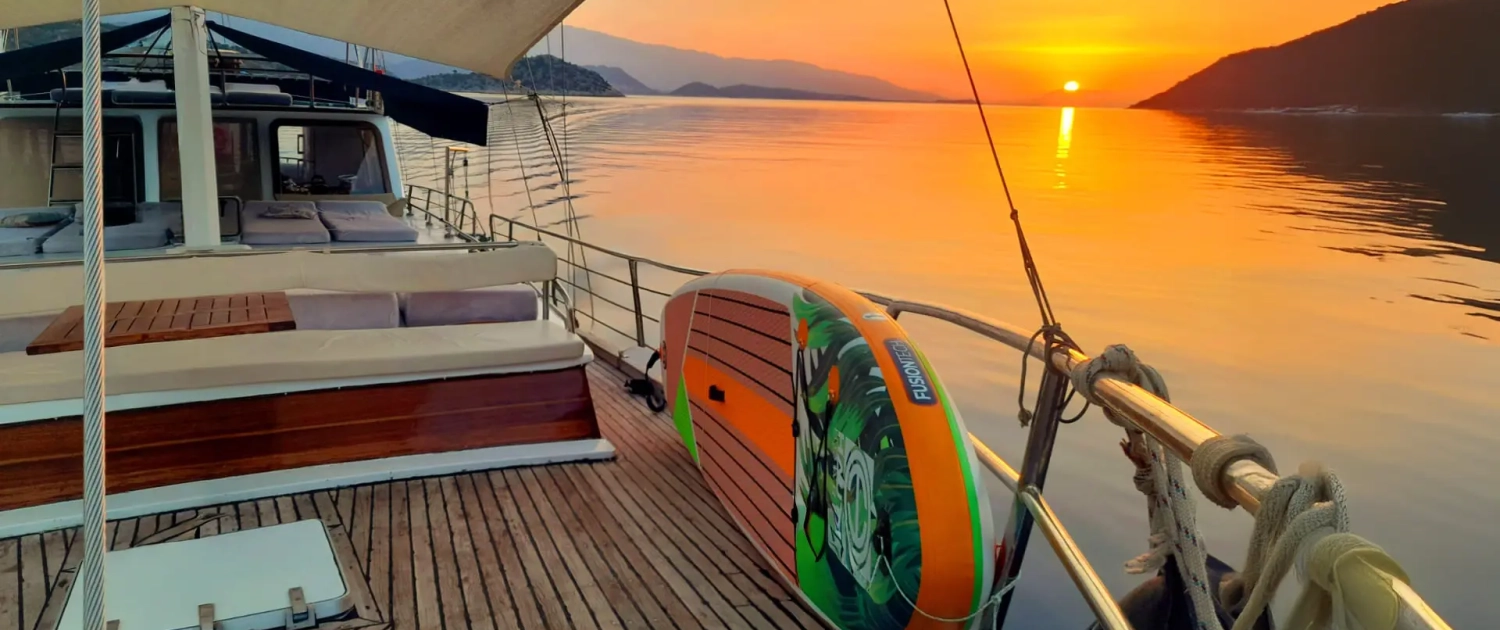
The ideal season for Turkish blue cruises runs from late April through October, with the warmest water and weather in summer and cooler, quieter conditions in spring and fall. June–August is peak season – very hot (air ~30–35 °C) and perfect for swimming (sea ~26–28 °C) – but also the busiest. By contrast, shoulder months (May–June and September–October) offer similarly pleasant temperatures (highs in the mid-20s °C) and warm seas (20–25 °C) with fewer crowds. Winter (November–March) is off-season: charters rarely run as conditions are cooler and stormier.
Key Takeaways
Season: Gulet cruises run roughly April–October. The water warms by late spring and stays warm until autumn.
Peak Summer (Jul–Aug): Hot (30–35 °C), nearly cloudless, with sea ~26–28 °C. Great for swimming but expect high crowds and prices.
Shoulder (May–Jun, Sep–Oct): Warm weather (mid-20s °C) and sea (~22–27 °C) with fewer tourists and often lower rates. Early/late season offers pleasant sailing and quieter bays.
Off-Season (Nov–Mar): Cool, rainy, and windy. Few gulets sail; many are hauled out for maintenance.
Water Temperature: Sea temps rise above 20 °C by May and peak around 28 °C in August, making summer and early fall ideal for swimming.
January
Winter sets in with cool and often rainy weather along Turkey’s coast. Average highs are only ~10–15 °C in regions like Antalya, and the sea is cold (~17 °C). Few blue cruises run now. The landscape is lush but the weather is unpredictable, so this is very much off-peak.
February
Similar to January: still off-season. Daytime highs remain in the low teens, and rain is common. The sea temperature is near its annual low (~16 °C), too cool for comfortable swimming. Many gulets are still in port for maintenance. Travelers will find calm harbors and good deals, but minimal cruise activity.
March
Spring slowly arrives. Days warm into the high teens (around 18 °C in coastal areas), though nights are still cool. Some charter companies begin limited sailing by late March, especially on milder days. The sea (~16–17 °C) is still chilly, so swimming is early-season level. Wildflowers start blooming along the coast. Overall crowds are very low.
April
Spring cruise season begins. Daytime weather becomes reliably warm (20–23 °C) and sunny, with rare rain. Marine conditions are improving. Sea temperatures rise to ~18 °C – still cool but tolerable for short swims. April sees the first of the shoulder-season charters: cruising guests enjoy pleasant weather, fewer boats in each bay, and midweek rates. See our Luxury Gulet Charter page for planning tips (April-May is noted as cooler but quiet).
May
Prime shoulder-season. Warm sunny days (mid-20s °C) and calm seas (~21 °C). Beach and swim stops feel comfortable by mid-May. Crowds are still moderate, and many villages are gearing up for summer. Night temperatures are mild. This is an excellent compromise between weather and value: cruises are plentiful, bays are attractive, and rates are usually lower than July/Aug.

June
Early summer. The weather is hot (up to high 20s °C) and sunny, with long daylight. Sea temperature climbs to ~24 °C, perfect for all-day swimming. June crowds start to build but are lower than peak season. This month balances great weather and still-moderate prices. Bight anchorages around Gocek or Fethiye are lively; see our Fethiye Blue Cruise Guide for popular June routes.

July
High summer peaks. Days are very hot (around 30–35 °C) and mostly rainless. Sea temperatures reach ~27 °C – ideal for swimming, snorkeling, and water sports. Coastal towns and bays are busy; expect full boats and active harbors. This is the most popular month for blue cruises. Advance booking is recommended. For a typical 7-night itinerary (e.g. Bodrum–Gokova), each day ends in a new bay under starry skies.
August
Similar to July in heat and crowds. August is the hottest and most vibrant season. Average highs remain in the low 30s °C, and water tops out near 28 °C. Beaches and anchorages can be crowded with international travelers. Sunscreen and early-morning swims are common. Onboard life is festive. Note that some guests find the peak heat intense, but sea breezes and shaded decks help.
September
Late summer/early fall. Weather is warm but slightly milder (mid-20s °C). Sea is still very warm (~27 °C). Tourists begin to thin out by late September. This is one of the “sweet spot” months: the water remains like a comfortable bath, skies are sunny, and popular spots are less crowded. Coastal towns slow down but remain lively, and daily prices often drop. Consider a 7-day Fethiye–Marmaris cruise to enjoy calm bays and clear nights.
October
Shoulder season wind-down. Days are mild (20–25 °C) and pleasant; evenings cool off. The sea (~24–26 °C) is still swimmable, especially early in the month. Rainfall may increase slightly later on. October cruises are quieter and romantic: fewer boats in the harbor, golden sunsets, and off-season rates. It’s still possible to visit famed coves like Butterfly Valley in lovely light. Late October often sees the last charters of the year.
November
Early November can still be mild (daytime ~18–20 °C), and the sea stays around 21 °C. However, rain becomes more frequent mid-month and winds pick up. Most gulets end their season by early November for maintenance. A lucky cruise in early November might enjoy warm afternoons and empty bays, but overall weather is unpredictable. Prices are very low if any cruises operate.
December
Winter weather returns: cool temperatures (often below 15 °C), gray skies, and wet days. The Mediterranean winds can be strong. Sea temperature drops toward 18–19 °C. Virtually no blue cruises run in December. Travelers may instead enjoy land tours, but sailing is generally limited to occasional private charters in the warmest ports.
Best Time for a Blue Cruise in Turkey: Month-by-Month Comparison
| Month | Swimming (Sea °C) | Crowds | Weather |
|---|---|---|---|
| January | Too cold (~17°C) | Very Low | Cool, rainy |
| February | Too cold (~16°C) | Very Low | Cool, rainy |
| March | Too cold (~16–18°C) | Very Low | Mild, some rain |
| April | Cool (~18°C) | Low | Mild, partly rainy |
| May | Good (~21°C) | Moderate | Warm, sunny |
| June | Ideal (~24°C) | High | Warm, sunny |
| July | Ideal (~27°C) | Peak | Hot, sunny |
| August | Ideal (~28°C) | Peak | Hot, sunny |
| September | Ideal (~27°C) | Moderate | Warm, sunny |
| October | Good (~25°C) | Moderate | Warm, partly rainy |
| November | Good (~21°C) | Low | Mild, rainy |
| December | Cool (~18°C) | Very Low | Cool, rainy |
Frequently Asked Questions
When is the sea warmest for a blue cruise?
Sea temperatures along the Turquoise Coast peak in late summer. August has the warmest water (~28 °C). June–September typically provide water above 23 °C, ideal for daily swims. By contrast, April and October–November see cooler seas (18–21 °C).
What is the main advantage of shoulder-season cruises (May/Sept)?
Shoulder months still offer warm weather and swimming, but with far fewer boats and lower prices. May and late September have mild days (mid-20s °C) and empty anchorages, making for a more relaxed trip than mid-summer.
Is it safe to sail in early spring or late fall?
Yes, as long as charters are running. Spring (April–May) and fall (Sept–Oct) days are generally calm and sunny, but a few rain showers can occur. Gulet companies carefully schedule cruises when conditions are favorable. November and beyond become risky and most charters stop.
Are July and August too hot for a blue cruise?
Some travelers find July/August heat intense (up to 35 °C), but gulets are equipped with fans/AC, and sea breezes help. These months mean guaranteed sunshine and warm nights. If you prefer milder heat, try June or September.
Is it possible to change my departure date?
Yes, it is possible to change your departure date based on availability. A minor fee will be charged, and if the new date has a higher cost, you’ll need to cover the difference. Alternatively, you can transfer the amount you’ve already paid to another trip of equal or greater value, as long as it’s outside the notification period.




 TripAdvisor Listings