
Turkish Gulets: A Comprehensive Guide to Traditional Wooden Yachts
Discover what makes Turkish gulets unique, from their Bodrum boatbuilding heritage and Blue Cruise history to modern cabins, spacious decks, crew hospitality, water activities and the different ways to experience a gulet cruise along Turkey’s Turquoise Coast.


A Turkish gulet is more than a wooden yacht. It is a floating piece of Turkey’s maritime culture, shaped by Bodrum boatbuilding, the Blue Cruise tradition and the slow rhythm of the Turquoise Coast.
Originally built for fishing, sponge diving and coastal trade, gulets have evolved into comfortable charter yachts with spacious decks, en-suite cabins, crew service and a uniquely relaxed way to explore Turkey’s hidden coves, turquoise bays and ancient coastal sites.
A gulet is a traditional Turkish wooden motor-sailer designed for comfort, stability and slow coastal cruising. Most modern gulets keep the classic wooden look but operate with engines, professional crew, comfortable cabins and modern safety equipment.
What is a Turkish gulet?
A Turkish gulet, pronounced goo-let, is a traditional wooden sailing boat, usually built with a broad beam, rounded stern and two masts. Some gulets have a third mast, but the most familiar style is the two-masted Bodrum-type gulet.
Most gulets range from around 14 to 35 meters in length, offering multiple cabins, large outdoor decks and shaded dining areas. Although they keep the appearance of classic sailing yachts, modern gulets are usually motor-powered for practical cruising.
This is why they are often described as motor-sailers: vessels that preserve the elegant lines of traditional sailboats while using diesel engines as the primary way to move between bays safely and reliably.
- Traditional wooden construction
- Two or three masts
- Wide beam and stable hull
- Large aft dining deck
- Forward sunbathing deck
- En-suite guest cabins
- Crewed by captain, chef and deckhands
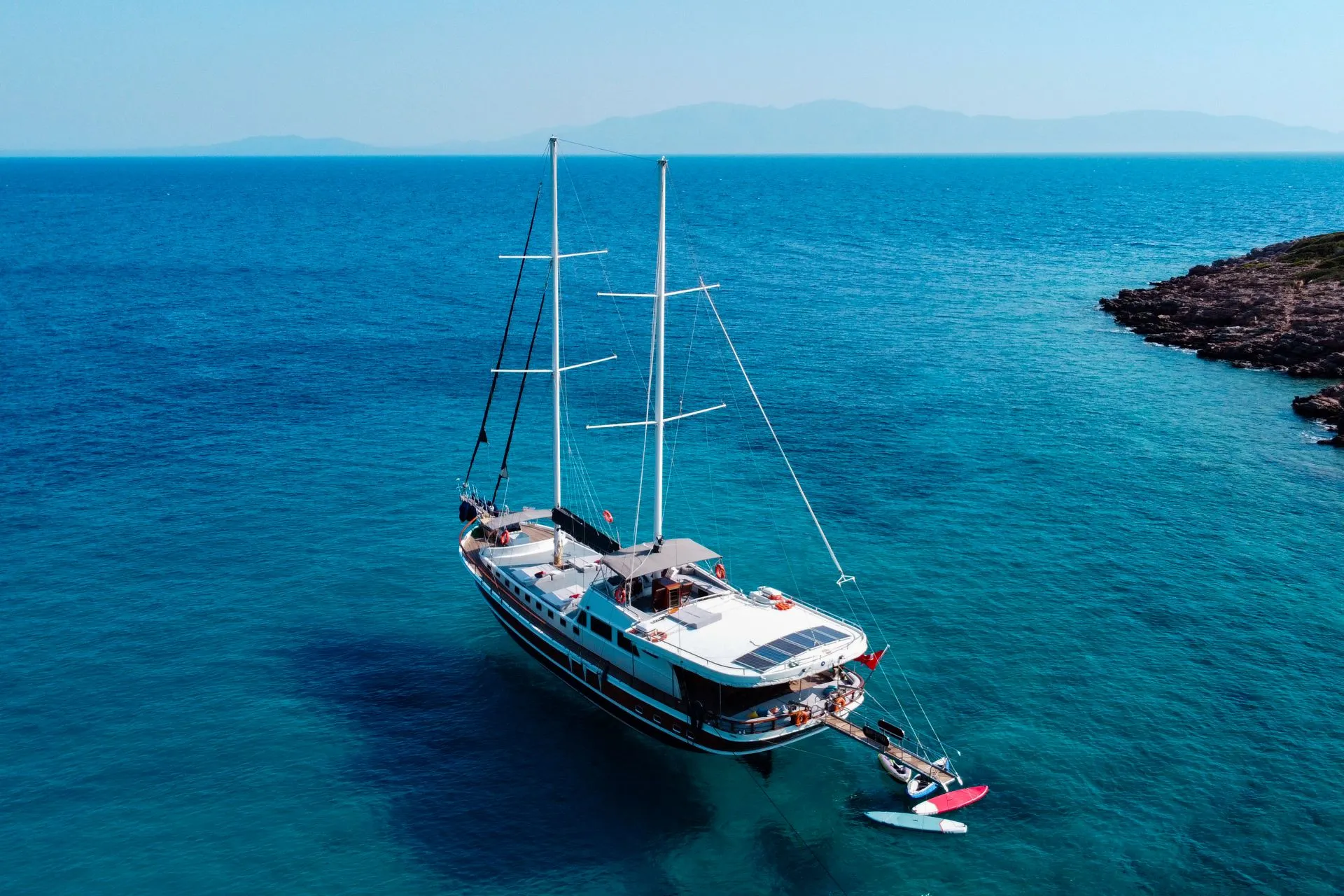
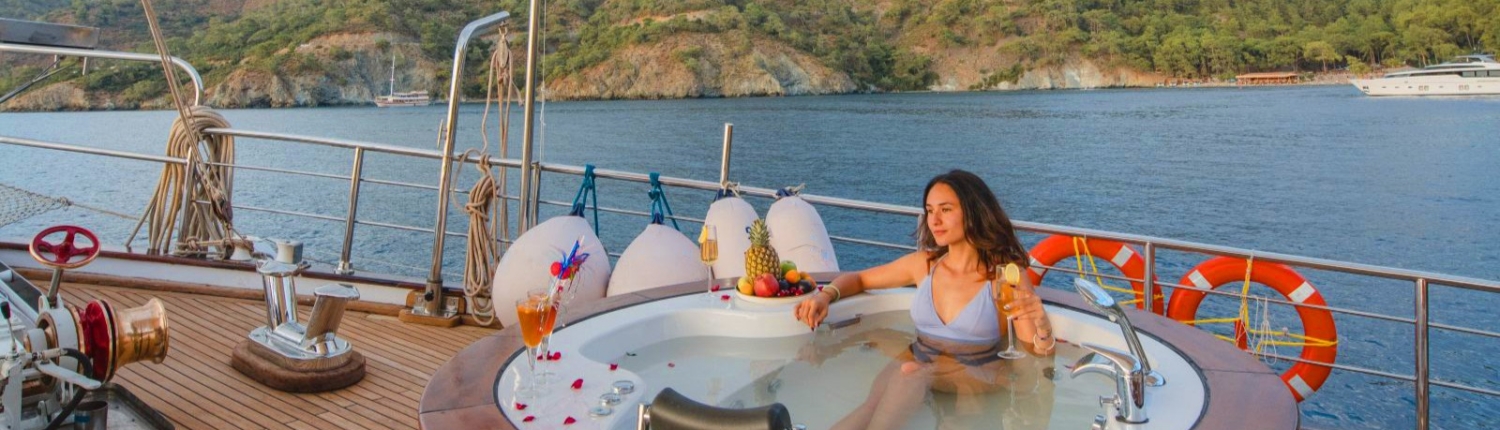
Key characteristics of Turkish gulets
Gulets are easy to recognize once you know what to look for: broad wooden hulls, rounded sterns, spacious decks, multiple cabins and a relaxed layout made for life outdoors.
- Wooden construction: Traditional gulets were hand-built from local timber. Modern versions often use stronger hardwoods such as teak, mahogany or iroko while preserving the classic wooden yacht feeling.
- Broad beam and rounded stern: The wide hull creates stability and generous outdoor space. The rounded aft section usually becomes the shaded dining and lounging area.
- Two or three masts: Gulets keep their traditional sailing appearance. Many can hoist sails, but most modern gulet cruises use engine power unless the wind and route conditions are right.
- Spacious deck life: Gulets are designed for slow leisure: sunbeds on the bow, shaded dining on the aft deck, open-air lounging and plenty of space for swimming breaks.
- Private cabins: Below deck, most gulets offer comfortable cabins with en-suite bathrooms. Cabin numbers usually vary from 4 to 10 depending on the vessel size.
- Dedicated crew: A gulet normally comes with a captain, chef and deck crew. They handle navigation, meals, service, safety and the everyday details of life on board.
Historical origins of the Turkish gulet
The story of the Turkish gulet stretches back through generations of coastal life in southwestern Turkey. Boatbuilders in Bodrum, Marmaris and nearby villages developed sturdy wooden vessels suited to the Aegean and Mediterranean seas.
Early working boats: The earliest gulet-like boats were practical work vessels used for fishing, sponge diving and carrying cargo between coastal communities.
Ottoman era to early Republic: Bodrum’s master shipwrights continued building wooden craft for local needs, maintaining techniques passed from one generation to the next.
Design evolution: Older pointed-stern working boats gradually gave way to rounded-stern schooner-like forms, creating more deck space and the classic Bodrum gulet profile.
Where the name comes from: The word “gulet” is often linked to the Italian goletta and French goélette, both meaning schooner.
From workboat to Blue Cruise yacht
The gulet’s transformation from working vessel to pleasure yacht is closely connected with the rise of the Blue Cruise, or Mavi Yolculuk. These leisurely voyages along the Turquoise Coast turned gulets into symbols of Turkish coastal travel.
- 1950s: Writer Cevat Şakir Kabaağaçlı, known as the Fisherman of Halicarnassus, helped popularize cruising among Bodrum coves with friends and local boats.
- 1960s–1970s: As visitors came to Bodrum, Marmaris and Fethiye, local boat owners began adapting working gulets with cabins, shade and guest comfort.
- 1980s onward: Gulets were increasingly built specifically for tourism, with multiple cabins, galleys, proper dining areas and more reliable engines.
Bodrum’s boatbuilding legacy
Bodrum remains the symbolic heart of gulet construction. Its boatbuilders are respected for combining tradition, practical knowledge and an eye for graceful wooden lines.
Materials: Traditional Bodrum gulets were often built in a “pine on pine” style, using local Turkish red pine. Today, builders commonly use stronger materials such as mahogany, iroko, oak or laminated wood for better durability.
The construction process: Building a gulet begins with the keel, followed by frames, planking, caulking and finishing. Even with modern tools, much of the work still depends on the builder’s hand, eye and experience.
The launch ceremony: One famous Bodrum tradition is the launch ceremony, where the new hull is slid into the sea on greased wooden skids with help from the yard and community.
Boatbuilding beyond Bodrum: While Bodrum set the standard, gulets are also built in Bozburun, Marmaris, Fethiye, Antalya and other specialized yards. Each region may add small stylistic differences, but the core design remains rooted in the Bodrum tradition.
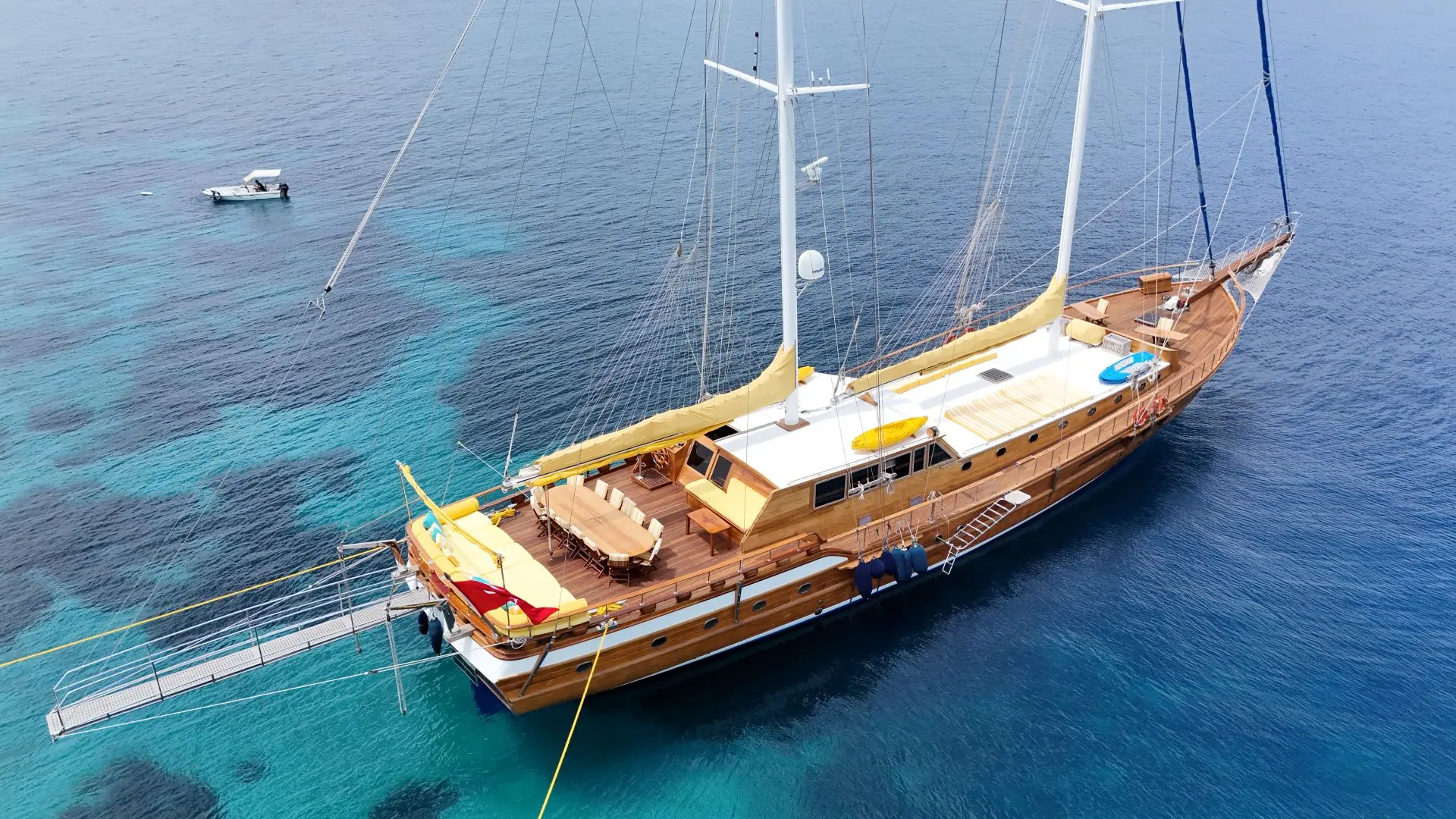
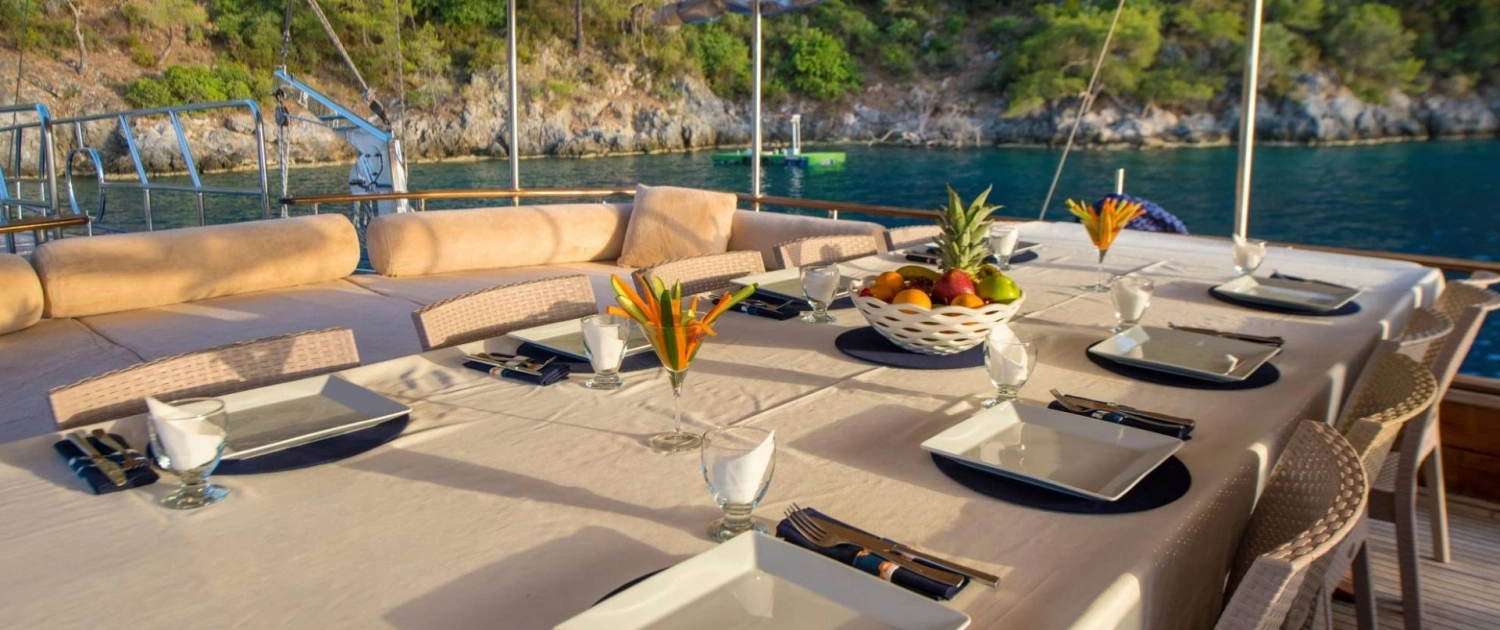
Design and amenities of modern gulets
Modern gulets blend traditional wooden character with contemporary comforts. Visually, they keep the old-world charm of varnished rails, sweeping hull lines and broad decks, but life on board feels like a relaxed boutique yacht.
- Aft deck dining and shaded lounges: The aft deck is usually the social heart of the boat, with shaded dining, cushioned seating and sea views.
- Forward sunbeds and swim breaks: The bow area is made for sunbathing, relaxing, reading and cooling off between swim stops.
- Wood-paneled private rooms: Cabins range from simple to luxurious, but most have en-suite bathrooms and basic storage for multi-day comfort.
- A/C, power and navigation: Many gulets include air-conditioning, generators, charging points, refrigeration, GPS, radios and safety equipment.
- Snorkels, kayaks and paddleboards: Depending on the boat class, equipment may include snorkels, fishing lines, kayaks, SUP boards or motorized toys.
- The hotel-at-sea feeling: The crew prepares meals, keeps the boat clean, handles navigation and creates the warm Turkish hospitality that makes gulet cruises memorable.

Ways to experience a gulet cruise
Gulets are the classic vessel of the Blue Cruise. You can experience them as a day trip, a short cabin cruise, a week-long route, or a fully private charter for your own group.


Daily gulet excursions (Day trip): A full-day taste of gulet life with lunch, swimming and classic sights such as Kekova’s Sunken City.
Short Blue Cruises (3–4 nights): Join a cabin charter on routes like Fethiye to Olympos or Bodrum to Gökova for a social, affordable cruise.

Week-long gulet cruises (7 nights): Spend a full week settling into gulet life with deeper routes, more bays, more towns and slower days.
Private gulet charter: Rent the entire gulet with crew for your family, friends or group and shape the route around your pace.
Why gulets became Blue Cruise icons
Over time, the image of a wooden gulet with white sails against blue sea and green hills became one of the most recognizable symbols of the Turquoise Coast.
- They reach places roads cannot: Gulets can anchor in remote bays, hidden coves and quiet islands that are difficult or impossible to reach by car.
- They slow the holiday down: The pace is unhurried: swim, eat, cruise, rest, explore and repeat. That rhythm is the heart of the Blue Cruise.
- They carry Turkish hospitality: Local crew, fresh food, tea after swims and family-run operations give gulet cruising a warm cultural feeling.
The enduring appeal of Turkish gulets
A Turkish gulet is a floating expression of maritime tradition, craftsmanship and coastal life. From sponge divers’ workboats to modern charter yachts, gulets carry the soul of the Turquoise Coast into every bay they visit.
Whether you are drawn to ancient ruins, hidden coves, warm hospitality, good food or the simple pleasure of waking up on the water, a gulet cruise offers a uniquely Turkish way to experience the Mediterranean.
Frequently asked questions about Turkish gulets
What is a Turkish gulet?
A Turkish gulet is a traditional wooden motor-sailer, usually with two masts, a broad beam, rounded stern, spacious deck areas and guest cabins designed for coastal cruising.
Do gulets actually sail?
Many gulets can hoist sails, but most modern gulet cruises use engine power for reliability, route planning and comfort. Sails may be used when wind and conditions are suitable.
Where are Turkish gulets built?
Bodrum is the most famous gulet-building center, but gulets are also built in Marmaris, Bozburun, Fethiye, Antalya and other specialized Turkish boatyards.
What is a Blue Cruise?
A Blue Cruise is a multi-day sailing holiday along Turkey’s Aegean and Mediterranean coasts, usually on a gulet, with swim stops, onboard meals, coastal scenery and relaxed cruising.
What is the difference between cabin charter and private gulet charter?
Cabin charter means booking one cabin on a shared scheduled cruise. Private gulet charter means renting the whole boat with crew for your own group.
Are gulets comfortable for overnight cruises?
Yes. Modern gulets are designed for leisure cruising, with cabins, en-suite bathrooms, shaded decks, dining areas, crew service and many modern amenities depending on the boat class.
Do I need sailing experience to join a gulet cruise?
No. Gulet cruises are crewed. The captain and crew handle navigation, anchoring, meals, safety and daily operations.
References and further reading
- Wikipedia — Gulet
- Turkey Luxury Gulet — What Is a Gulet Boat?
- GuletYacht.net — Turkish Gulets
- European Yacht Brokers — A Concise History of the Turkish Gullet
- Guletbookers — About Gulets
- marineSOLUTIONS — Traditional Boat Building in Bodrum
- Galeo Yachting — New Gulet Construction
Plan your gulet cruise
Tell us your dates, route preference and group size. We’ll help you find the right gulet cruise or private boat option.
More articles like this

Gulet Cruise in Turkey: Cabin Charter vs Private Gulet
Compare cabin charter and private gulet cruise options in Turkey. Learn the differences in price, privacy, route flexibility, atmosphere, meals, boat comfort and group…
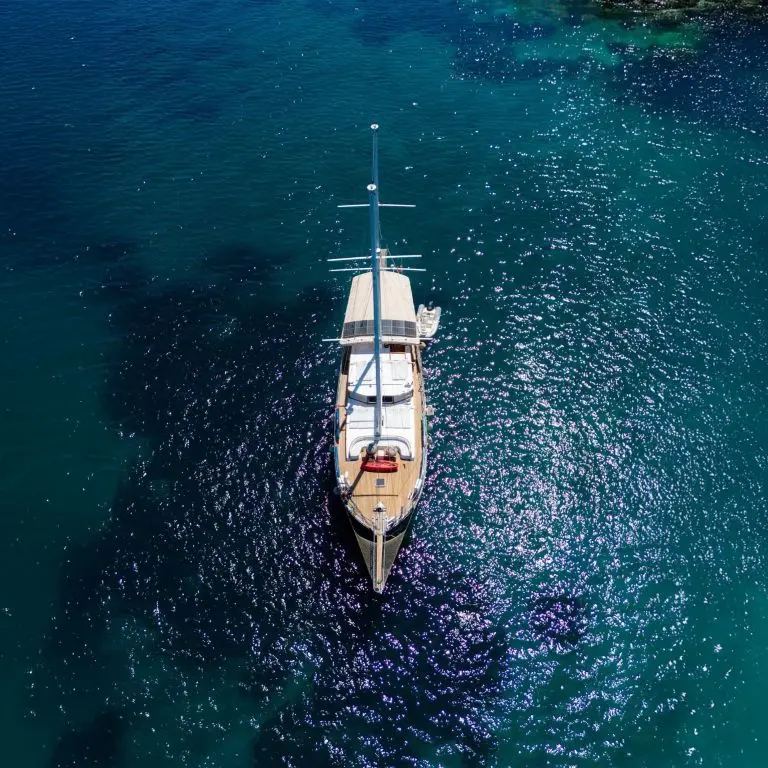
Luxury Gulet Charter in Turkey: The Ultimate Blue Cruise Experience
Discover what makes a luxury gulet charter in Turkey the ultimate private Blue Cruise experience. Learn about en-suite cabins, professional crew, flexible routes, gourmet…
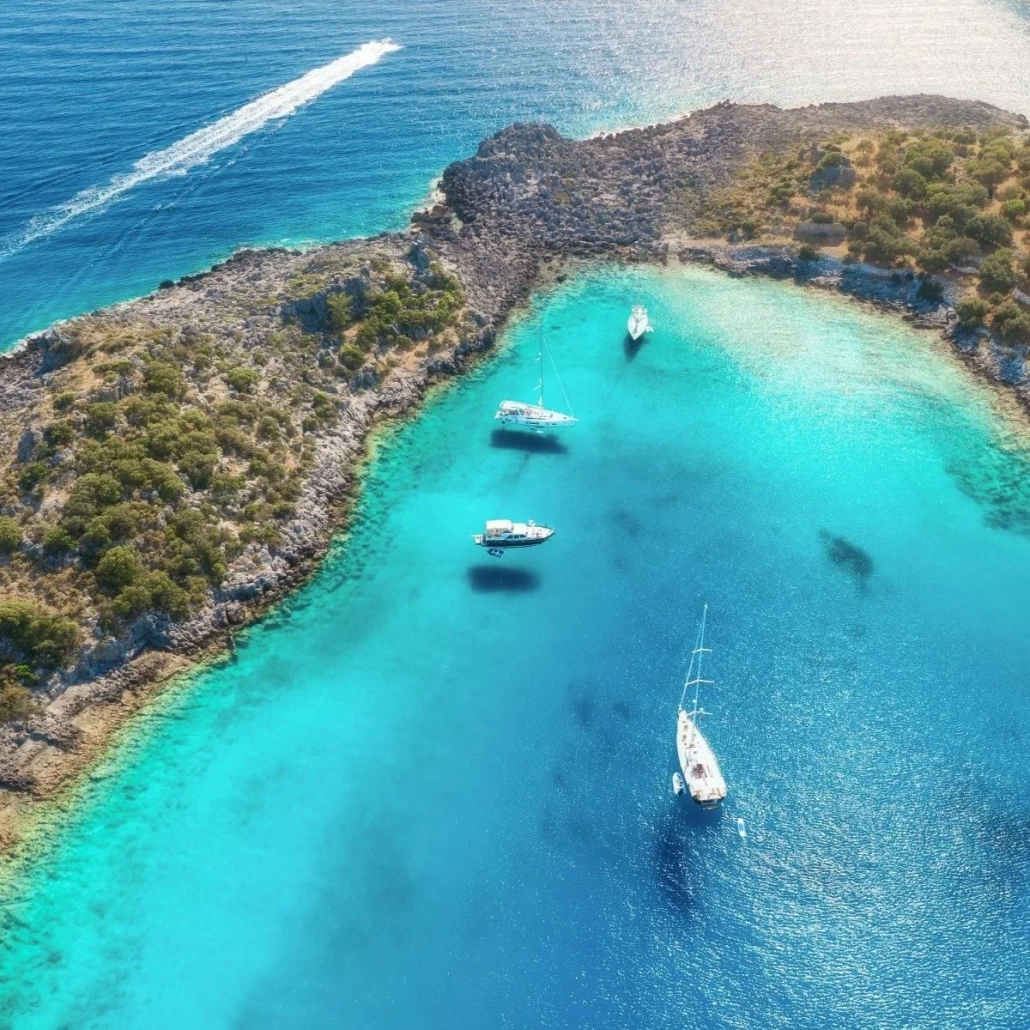
Fethiye Holidays 2026: Sail the Turquoise Coast with YourTourKey
Plan your Fethiye holiday for 2026 with YourTourKey. Discover Blue Cruises, cabin charters, private gulet routes, Ölüdeniz, Butterfly Valley, Göcek bays, Kekova, swim stops,…
