Lost Cities of the Lycian Civilization: Xanthos, Patara, Myra & Olympos.
Explore the lost cities of the Lycian civilization in Turkey, including Xanthos, Patara, Myra and Olympos. Learn their history, mythology, archaeological highlights, connection to the Lycian League, Saint Nicholas, the Chimaera flames, Kekova, Blue Cruise routes and how to visit these ancient sites today.

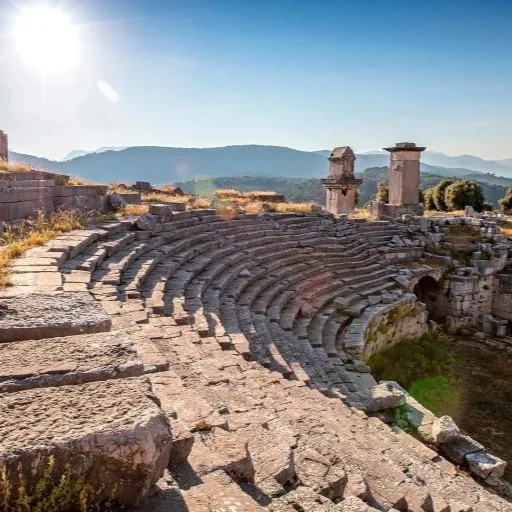
The Lycian civilization flourished in southwestern Anatolia, in present-day Turkey, along the Teke Peninsula between the Mediterranean Sea and the Taurus Mountains. Known as the Lukka in Hittite and Egyptian records of the Bronze Age, the Lycians are even mentioned in Homer’s Iliad as allies of Troy under the leadership of Prince Sarpedon.
By the Classical era, Lycia had developed one of the ancient world’s most remarkable political systems: the Lycian League, a federation of autonomous city-states with a representative assembly. Major cities such as Patara, Xanthos, Olympos, Myra, Pinara and Tlos played central roles in this union.
Over time, many once-prosperous Lycian cities declined because of conquest, environmental change, harbour silting, earthquakes and shifting trade routes. What remains today are ruins full of atmosphere: rock-cut tombs, theatres, council houses, temples, overgrown streets, ancient harbours and coastal myths.
The four lost Lycian cities at a glance
Each city represents a different side of Lycia. Xanthos is the tragic political capital, Patara is the maritime and democratic centre, Myra is the city of painted tombs and Saint Nicholas, while Olympos is the mythic forest ruin connected to pirates and eternal flames.
Capital of legend and tragedy
Known for monumental Lycian tombs, heroic resistance, the Harpy Tomb, the Nereid Monument and its UNESCO-listed legacy with Letoon.
Port of Apollo and Lycian democracy
Once a major harbour, oracle centre and Lycian League capital, also associated with St. Nicholas and one of Turkey’s longest beaches.
Painted tombs and Saint Nicholas
Famous for dramatic cliff tombs, Lycia’s largest theatre, Andriake harbour and the Church of St. Nicholas in modern Demre.
Sacred flames and pirate stories
A forest-covered ruin beside the sea, linked to the Chimaera flames, Hephaestus, pirates and a bohemian modern travel scene.
Choose a Lycian city to preview
Use this quick selector for a first impression, then continue into the full detailed sections below.
Xanthos: the city that died twice
Xanthos was one of Lycia’s greatest cities, famous for its pillar tombs, inscriptions and dramatic stories of resistance against Persian and Roman forces.
- UNESCO-listed with Letoon
- Harpy Tomb and Nereid Monument legacy
- Important inscriptions for Lycian language studies
- Strong road access from Fethiye, Kalkan and Kaş
Patara: where mythology meets political history
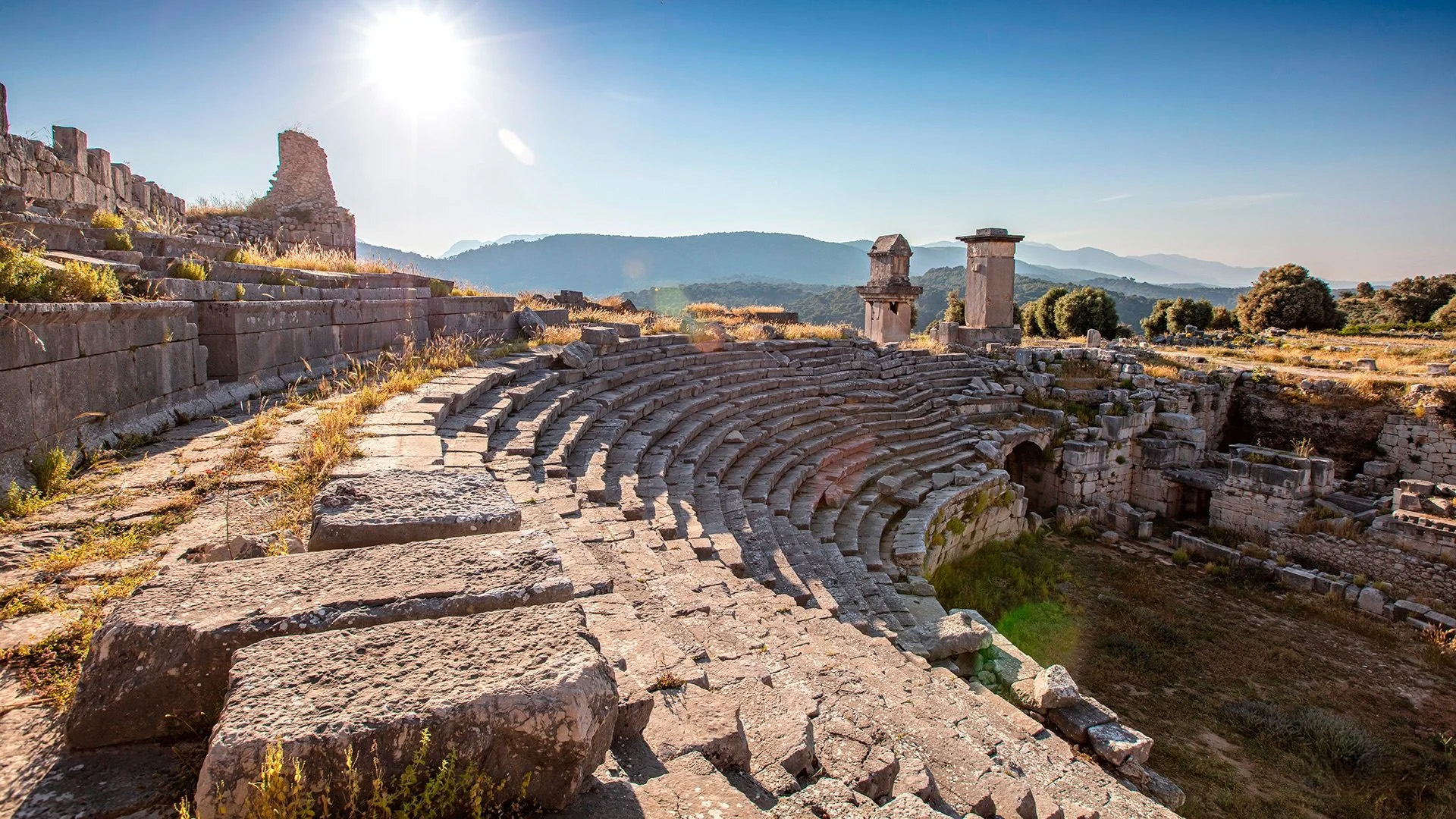
Patara was a major Lycian port, a famous oracle of Apollo, the meeting place of the Lycian League and the birthplace of St. Nicholas.
- Lycian League parliament building
- Ancient theatre and colonnaded street
- Reconstructed Roman lighthouse project
- Patara Beach and turtle nesting area nearby
Myra: one of Lycia’s most visual archaeological sites
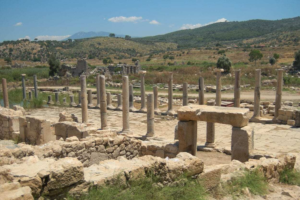
Myra combines cliffside Lycian tombs, a large Roman theatre, Andriake harbour and the Church of St. Nicholas in nearby Demre.
- Rock-cut tomb façades carved into cliffs
- Largest theatre in Lycia
- St. Nicholas Church in Demre
- Easy to combine with Kekova boat trips
Olympos: ruins hidden in a coastal valley
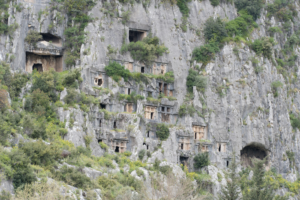
Olympos is unlike the others: overgrown, atmospheric, river-cut and connected to the eternal flames of Yanartaş.
- Ruins inside Olympos Coastal National Park
- Chimaera / Yanartaş eternal flames nearby
- Ancient pirate stronghold history
- Modern treehouse and backpacker atmosphere
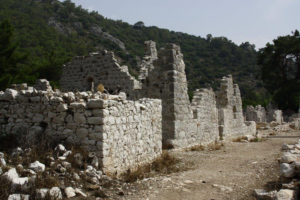
Xanthos: Lycian capital of legend and tragedy
Xanthos, known in Lycian as Arñna, was one of the largest and most influential cities of Lycia. It stood on a hill above the Xanthos River, today’s Eşen Çayı, near the modern village of Kınık. Ancient writers such as Strabo described Xanthos as the largest city in Lycia, and the site served as a major centre of Lycian culture, commerce and political power.
The city is especially celebrated for its funerary architecture. Xanthos contains rock-cut cliff tombs, pillar tombs and monumental sarcophagi, including the famous Harpy Tomb and other tomb monuments dating from the 5th century BCE. These monuments show a distinctive Lycian fusion of local Anatolian traditions and Greek artistic influence.
Several of Xanthos’ most important sculptures and architectural pieces were removed in the 19th century by British explorer Charles Fellows and are now housed in the British Museum. These include the Nereid Monument, a richly carved tomb-temple, and the decorated sarcophagus of Payava. Replicas and remaining fragments can still be seen at the site, but many originals are in London.
Xanthos is also essential for the study of the Lycian language. Inscriptions discovered at the site and nearby Letoon, including trilingual texts in Lycian, Greek and Aramaic, helped scholars partly decipher the Lycian language and better understand Lycian society, religion and political life.
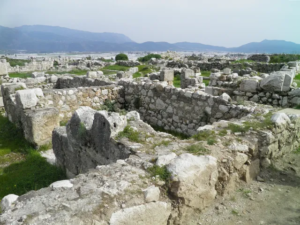
A city remembered for defiance
Historically, Xanthos gained a reputation for heroic resistance and tragic sacrifice. According to Herodotus, in 546 BCE the Persians under Harpagus besieged the city. The Xanthians, refusing to submit, allegedly chose to destroy their city and perish rather than surrender. Archaeological evidence of a violent destruction layer supports the account of a fiery fall during the Achaemenid conquest.
Remarkably, a similar tragedy was later associated with Xanthos during the Roman civil wars. In 42 BCE, the city was besieged by Brutus, one of Caesar’s assassins. Roman sources recount that the citizens again burned the city and themselves, demonstrating the fierce independence for which Lycians became famous. These two episodes gave Xanthos its legendary identity as a city that “died twice” for liberty.
Despite these disasters, Xanthos rose again. Under Persian rule it became the seat of Lycian dynasts. In the Hellenistic era it prospered and struck its own coinage. It later became a founding member of the Lycian League and, after Lycia was annexed by Rome in 43 CE, was absorbed into the Roman province of Lycia et Pamphylia. By Late Antiquity, Xanthos had a Christian bishopric and several churches, before declining and eventually being abandoned.
Today, Xanthos is recognized as a UNESCO World Heritage Site together with the sanctuary of Letoon. Visitors can walk among the remains of the acropolis, theatre, temples, pillar tombs, sarcophagi and inscriptions. The site lies roughly 65 km southeast of Fethiye and 35 km northwest of Kaş, making it a convenient archaeological stop on a wider Turquoise Coast route.
Guided excursions often combine Xanthos with nearby Letoon and Patara. Independent travellers can explore the ruins at leisure, and outside peak season the site can feel surprisingly quiet considering its historical importance.
Patara: ancient port of Apollo and birthplace of Saint Nicholas
Patara was one of the most significant cities of Lycia. Located near the mouth of the Xanthos River, it commanded a natural harbour and became wealthy through maritime trade, naval power and its strategic position on the southern Lycian coast.
In mythology, Patara was associated with Apollo. Ancient traditions connected the city with Apollo’s oracle, sometimes considered second only to Delphi. It was said that Apollo resided at Patara during the winter months, delivering prophecies before returning to Delos or Delphi in summer. Although the Temple of Apollo has not yet been fully revealed, Patara’s spiritual importance was widely known in Classical sources.
Patara’s political importance was just as strong. It became the de facto capital of the Lycian League, and its council chamber served as the meeting place where representatives of Lycian cities gathered. The restored parliament building is now one of Patara’s most important features, allowing visitors to stand inside a space often described as one of the ancient world’s most remarkable examples of representative government.
During the Roman period, Patara continued to flourish. After Rome annexed Lycia in 43 CE, the city became the capital of the province of Lycia-Pamphylia. Roman investment brought a large theatre, baths, a triumphal arch, public buildings and a monumental lighthouse at the harbour entrance.
From Lycian capital to buried ruin
Patara’s fortunes reflected Lycia’s wider history. The city was known in Hittite texts and was important by the Classical period. In the Hellenistic age, it changed hands among Alexander the Great’s successors and was even renamed Arsinoe for a time under Ptolemaic rule. Once Lycia regained autonomy, Patara resumed its status as a central city of the league.
The Roman period brought new prominence. The theatre, baths, granaries and lighthouse testified to the city’s prosperity. The lighthouse, erected under Emperor Nero in 64 CE, is one of the oldest known lighthouses, and its reconstruction from original stones has become one of the most exciting archaeological projects in the region.
Patara is also associated with the early Christian world as the birthplace of St. Nicholas, born around 270 CE. Nicholas later became bishop of Myra and was remembered for generosity and miracles, eventually becoming the figure behind the Santa Claus tradition. This gives Patara significance for Christian heritage as well as classical history.
Patara declined when its harbour gradually silted up with sand and alluvium. Earthquakes and raids further weakened the city, and by the medieval period it had largely been abandoned. Over time, dunes and marshes covered much of the ancient settlement.
The archaeological site of Patara is large and atmospheric. Visitors can enter near the triple-arched city gate, walk along the partially reconstructed colonnaded street, explore the theatre, see the restored parliament building, and view remains of baths, temples, basilicas and harbour structures.
Patara’s beach is an added draw. The long sandy shoreline is a protected nesting ground for sea turtles, so the site offers a rare combination of archaeology and beach time. Many travellers visit the ruins in the morning and swim later in the day, especially when staying in nearby Kalkan, Kaş or Gelemiş village.
Myra: city of painted tombs and Saint Nicholas
Myra, near modern Demre, was another of Lycia’s foremost cities. It is most famous today for its cliffside rock-cut tombs, its large Greco-Roman theatre and its connection with St. Nicholas, the bishop whose memory later evolved into the figure of Santa Claus.
The ruins of Myra lie on the fertile coastal plain where the Myros River, today’s Demre Çayı, meets the sea. As one of the six leading cities of the Lycian League, Myra held three votes in the league’s council and was known for prosperity and strong civic institutions.
Myra became especially important during the Roman Imperial period. By the 2nd century CE it had grown into the metropolis of Lycia, and wealthy benefactors helped rebuild public buildings after earthquakes. The benefactor Opramoas of Rhodiapolis, for example, contributed to Myra’s theatre and other monuments after the earthquake of 141 CE.
During the Byzantine period, Myra became an important Christian centre. St. Nicholas served as bishop of Myra in the 4th century, and after his death a church was built in his honour. The Church of St. Nicholas still stands in Demre and preserves Byzantine architectural remains, frescoes and a pilgrimage legacy.
Rock tombs, theatre and Andriake harbour
Myra’s cliffside necropolis is one of the great visual symbols of Lycian heritage. The tombs are carved directly into limestone cliffs above the ancient theatre and resemble wooden houses or temple façades. Many include pillared fronts, inscriptions, reliefs and scenes linked to the deceased and their families.
The so-called Painted Tomb or Lion’s Tomb preserves traces of colour and sculptural decoration, reminding visitors that ancient Lycian tombs were not always the bare stone monuments we see today. They were once vivid, symbolic and deeply connected to beliefs about death, memory and status.
At the foot of the tomb cliffs stands the Great Theatre of Myra, often described as the largest theatre in Lycia. Its seating area is well preserved, and the stage building still displays carved decorative fragments. Visitors can walk through the entrances, stand in the performance area and view the tombs rising behind the theatre.
Nearby Andriake was Myra’s harbour. Its granary, warehouses and other harbour remains now help visitors understand Lycia’s maritime trade and the connection between inland cities and the sea. The Museum of Lycian Civilizations at Andriake adds further context for travellers interested in inscriptions, coins, trade and everyday life.
Myra is one of the easiest and most rewarding Lycian sites for modern travellers. It is well signposted in Demre, and many visitors combine it with the Church of St. Nicholas and a Kekova boat trip in one day.
Typical excursions from Antalya, Kemer, Kaş or Demre include the rock tombs and theatre, St. Nicholas Church, and a boat journey to Kekova’s Sunken City and Kaleköy. Gulet cruises along the Turquoise Coast also often connect Demre, Myra and Kekova as part of a wider Lycian Coast experience.
Olympos: sacred flames and a pirate haven in Lycia
In a secluded valley where the forests of Mount Olympos meet the sea lie the ivy-clad ruins of Olympos, once a Lycian city, later a pirate stronghold and today one of the most atmospheric archaeological sites on the Turkish coast.
Olympos was established in the Hellenistic period, probably in the 3rd or 2nd century BCE. By around 168 BCE it was important enough to rank among the six primary cities of the Lycian League, possessing three votes in the league’s parliament.
The city took its name from Mount Olympos, today’s Tahtalı Dağı, which rises dramatically above the coast. Nearby Yanartaş, the Chimaera flames, adds a mythic layer to the site. Natural fires burn from vents in the rocky hillside, and ancient people associated them with the fire-breathing monster defeated by Bellerophon and Pegasus.
The flames also made the area a cult centre of Hephaestus, the god of fire and metalworking. Archaeological remains at Yanartaş point to ancient ritual activity, confirming that the “Fire of Olympos” was revered for centuries.
Pirates, Rome and a forest-covered ruin
In the late Hellenistic period, Olympos became caught up in the rise of piracy in the eastern Mediterranean. Its secluded coastal position made it a useful base for Cilician pirates, and in the 1st century BCE it was captured by the pirate captain Zenicetes, who used it as a stronghold alongside nearby Phaselis.
Rome eventually moved against the pirates. In 78 BCE, Publius Servilius Vatia campaigned against them, besieging Olympos. Ancient accounts state that Zenicetes set fire to his own stronghold and died rather than be captured. Olympos was damaged but later resettled under Roman control.
Under Rome, the city entered a new period of stability. Emperor Hadrian visited Olympos in 129 CE, and the settlement saw improvements such as a rebuilt harbour, a marble-paved main street and granaries. Christianity also reached Olympos early, and one of its bishops, Methodius, became an important Christian theologian and martyr.
Through the Byzantine and medieval periods, Olympos continued as a modest coastal settlement. Venetian and Genoese traders later fortified parts of the coast. By the 15th century, however, Olympos was abandoned, possibly because of disease, changing trade routes or migration to more secure locations. Over time, vegetation reclaimed the ruins.
Olympos Archaeological Site is distinctive because it is not an open, monumental ruin field like Xanthos or Patara. Instead, its remains are scattered along a wooded river valley inside Olympos Beydağları Coastal National Park. Visitors walk beside the river, through trees and overgrown stonework, discovering walls, baths, tombs, a theatre, basilica remains and carved fragments.
Near the beach entrance, two sarcophagi stand prominently, including the Tomb of Captain Eudemos, decorated with a ship relief and an inscription that evokes the idea of the “last harbour.” Nearby Çıralı and Olympos villages add a modern bohemian atmosphere, famous for treehouse-style stays, eco-camps, beach access and evening excursions to the Yanartaş flames.
Visiting the Lycian lost cities today
The ruined cities of Lycia are now central to cultural tourism along Turkey’s southern coast. They allow travellers to step back into the ancient world while still enjoying the region’s beaches, boat trips, mountains, walking trails and Mediterranean food culture.
Easy cultural excursions
Travellers based in Antalya, Kaş or Fethiye can join guided excursions to Lycian sites. A classic route combines Demre, Myra, St. Nicholas Church and a Kekova boat trip to see the Sunken City.
History by sea
Traditional gulet cruises often trace the Lycian Shore, stopping at scenic bays, archaeological sites, Kekova, Olympos/Çıralı, Demre and transfer points for Xanthos and Patara.
Explore at your own pace
Renting a car gives flexibility to combine Xanthos, Letoon, Patara, Myra and lesser-known sites, with beach stops and local villages between them.
Walk through ancient landscapes
The Lycian Way long-distance trail links Fethiye and Antalya, passing near ancient sites, rural villages, hilltop ruins, coastal views and places connected to Lycian identity.
Boat tours are a particular highlight because Lycia was deeply connected to the sea. The Blue Cruise tradition, or Mavi Yolculuk, brings together slow travel, storytelling, swim stops and archaeological context. On a gulet, travellers can hear the tale of the Chimaera beneath the night sky, sail near Kekova’s sunken remains, or connect coastal ruins in a way that echoes ancient maritime movement.
Land-based travellers can also build a powerful route. Xanthos and Letoon can be paired with Patara, while Myra and Demre combine naturally with Kekova. Olympos can be visited with Çıralı and Yanartaş, creating a trip that blends archaeology, mythology, nature and coastal relaxation.
These sites are also active places of preservation. At Patara and Xanthos, visitors may see ongoing excavation or restoration work. Turkey’s Ministry of Culture has invested in museums, signage and site interpretation, while travellers are encouraged to respect the ruins, avoid climbing fragile tombs and treat the landscape as both a cultural and natural heritage area.
How to include Lycian ruins in a Turkey trip

Fethiye to Olympos Blue Cruise
A classic short route connecting Fethiye, Kaş, Kekova, Demre/Myra and the Olympos region by sea and short transfers.
View cruise →
Fethiye to Kekova and Back
A longer round-trip route with more time for Fethiye bays, Kaş, Kekova, Simena and Lycian coastal atmosphere.
View route →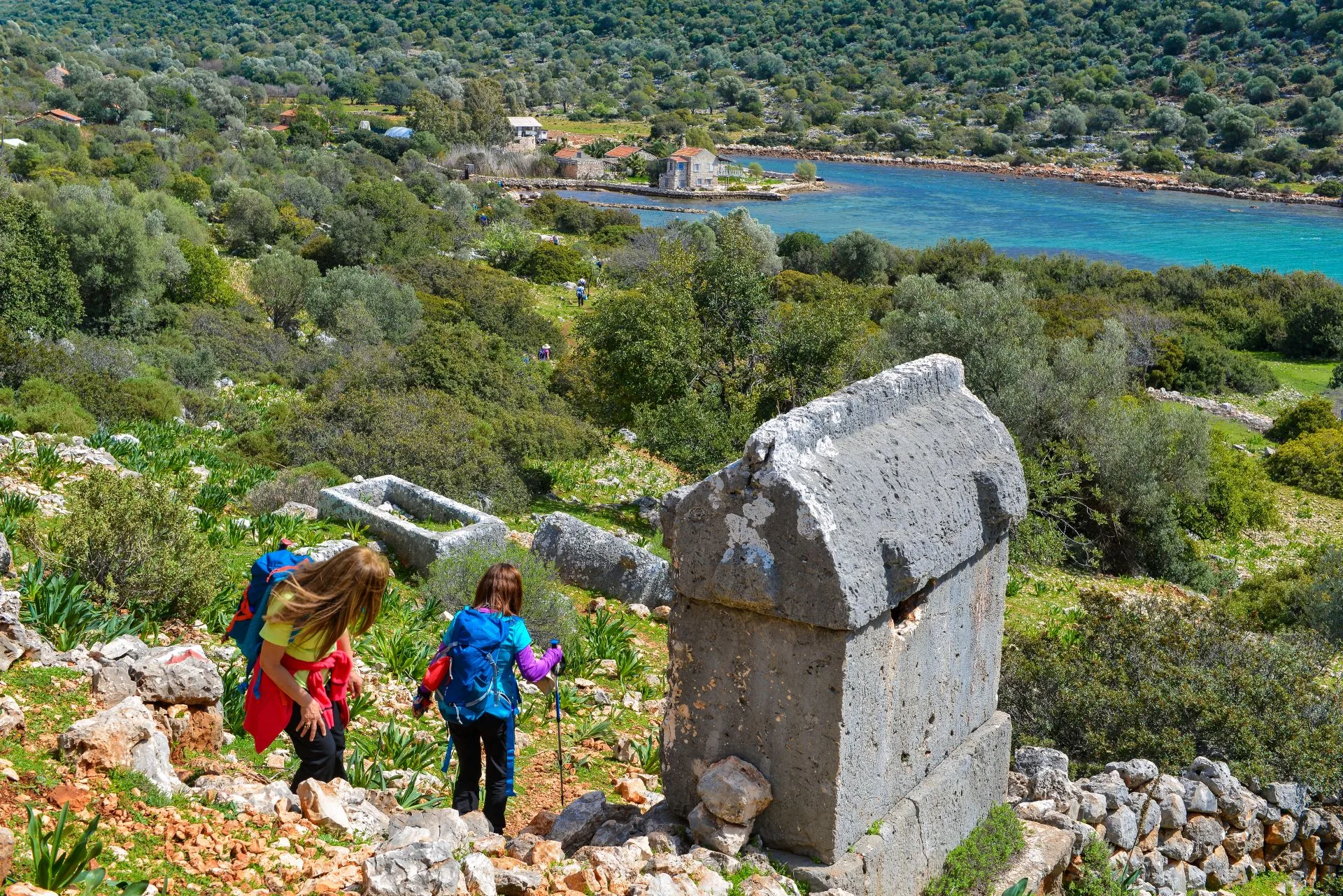
Lycian Way Sailing Adventure
Combine ancient coastal walking routes, ruins, swim stops and gulet comfort along the Lycian shoreline.
View experience →
Fethiye Blue Cruise Guide
Learn how Fethiye routes connect Butterfly Valley, Kaş, Kekova, Demre, Myra and the Lycian Coast.
Read guide →Why these lost cities still matter
Visiting the Lycian lost cities today is more than sightseeing. It is an encounter with one of Anatolia’s most distinctive ancient cultures: a civilization remembered for federation, maritime trade, monumental tombs, local language, mythology, early Christianity and a strong identity shaped between mountain and sea.
Whether you are standing in the Lycian League council house at Patara, looking up at Myra’s painted tombs, walking through forested Olympos, or viewing Xanthos from its acropolis, these places make history feel physical. They are not just ruins; they are landscapes of memory.
By following the paths between these once-lost cities, modern travellers become part of Lycia’s continuing story, helping keep its history alive while enjoying the same seascapes, mountains and harbours that shaped an extraordinary civilization.
Frequently asked questions about Lycian lost cities
Important Lycian cities included Xanthos, Patara, Myra, Olympos, Tlos, Pinara, Letoon, Limyra and others. This guide focuses on Xanthos, Patara, Myra and Olympos because they represent different sides of Lycian history.
Myra is one of the easiest and most visual sites for first-time visitors because the rock tombs and theatre are compact, dramatic and easy to understand. Patara is excellent if you want ruins and beach time together.
Yes. Xanthos is one of the most important Lycian archaeological sites and is UNESCO-listed together with Letoon. It is especially rewarding for travellers interested in inscriptions, tombs, political history and Lycian identity.
Yes. Many travellers combine Myra’s ruins, the Church of St. Nicholas in Demre and a Kekova boat trip in one day. This is one of the most popular cultural day-trip combinations on the Lycian Coast.
Olympos is more forested, wild and atmospheric than many other sites. Its ruins are scattered through a river valley, and the nearby Yanartaş flames connect the site with the myth of the Chimaera.
Yes. Blue Cruise routes along the Lycian Coast often connect Fethiye, Kaş, Kekova, Demre, Myra and Olympos, while Xanthos and Patara can be reached by short land transfers from coastal bases.
References and further reading
Planning a blue cruise in Turkey?
Tell us your dates, route preference and group size. We’ll help you find the right gulet cruise or private boat option.