YourTourKey Academy|December 7, 2025
Introduction
If you’ve ever dreamed of sailing along Turkey’s Turquoise Coast, chances are you’ve heard of the Turkish gulet. These are the traditional two or three-masted wooden sailing yachts built in coastal towns like Bodrum and Marmaris, which have become icons of Turkey’s “Blue Cruise” voyages. Originating as humble working vessels for fishermen and sponge divers, Turkish gulets today have evolved into comfortable charter yachts, offering travelers an unforgettable way to explore hidden coves, turquoise bays, and ancient coastal sites in style. In this comprehensive guide, we’ll dive into what makes gulets special – from their history and construction to the modern gulet cruising experience.
What Is a Turkish Gulet?
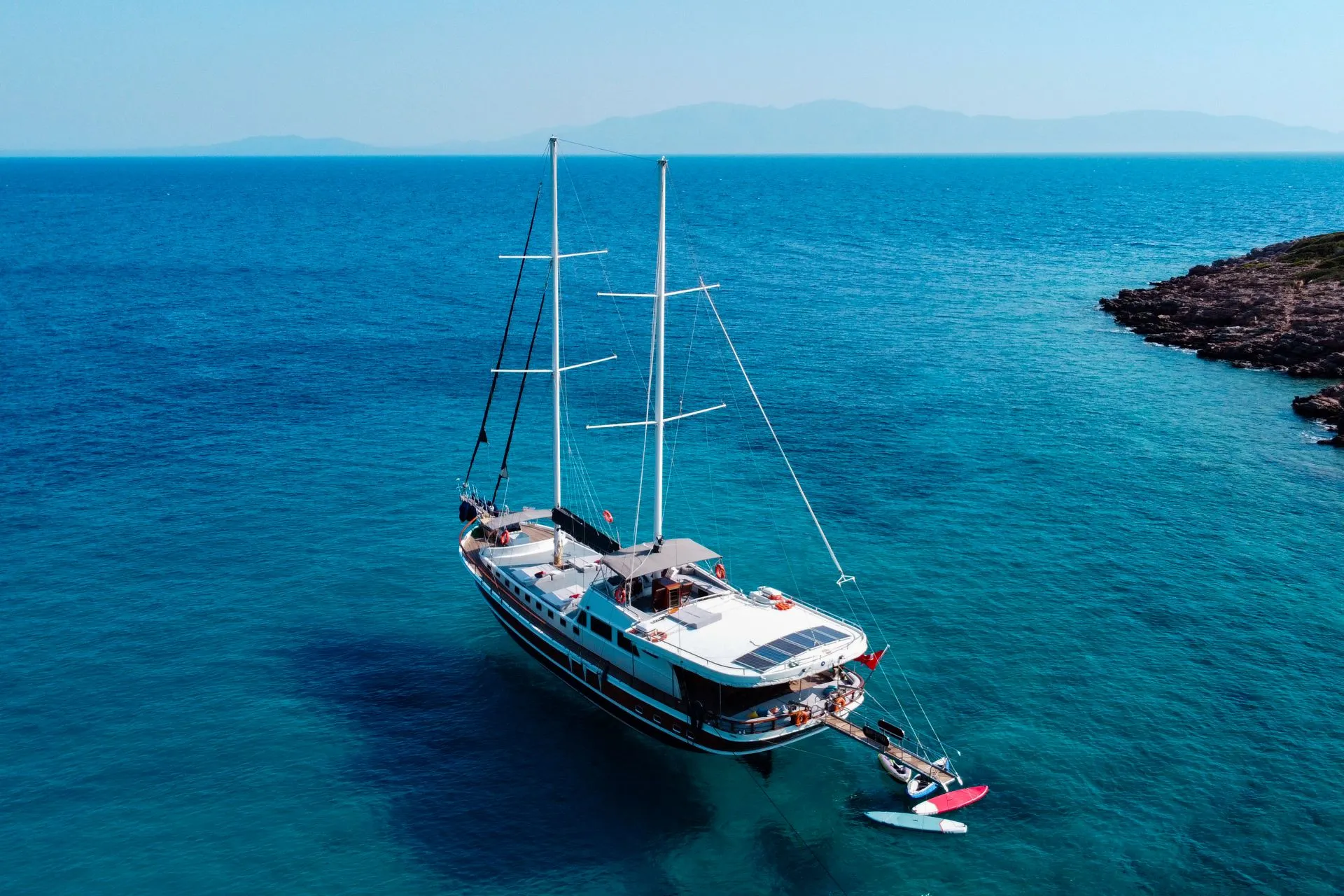
A Turkish gulet (pronounced goo-let) is a type of traditional wooden sailing boat, typically sporting two masts (and sometimes a third) with a broad beam and a rounded stern for stability. Most gulets range from about 14 to 35 meters in length (roughly 45–115 feet), providing multiple cabins and ample deck space. Although originally rigged with sails, nearly all modern gulets are also motor-powered for practical cruising. In essence, they are often described as motor-sailers: vessels that preserve the elegant lines of classic sailboats but use diesel engines as the primary means of propulsion.
Key characteristics of a Turkish gulet include:
Wooden construction: Traditionally hand-built from wood by highly skilled craftsmen. Early gulets were constructed using local timber (such as pine or chestnut) for both hull and frame, giving them a rustic authenticity. Modern gulets, however, often incorporate durable hardwoods like teak, mahogany, or iroko to ensure longevity and toughness. The result is a sturdy vessel that marries old-world techniques with improved materials.
Broad beam & rounded stern: Gulets have wide hulls that create excellent stability at sea and a characteristically broad, rounded aft (rear) section. This design yields generous deck areas for passengers to lounge, dine, and enjoy the views. The spacious aft deck is usually equipped with a large dining table and cushioned seating, perfect for alfresco meals.
Two or three masts: The typical rig is a two-masted configuration (ketch or schooner). A gulet’s masts and sails maintain a traditional appearance, and while many gulets can hoist sails, they generally cruise under engine power except when winds are favorable. The most common design has two masts, with a forward mast (foremast) and a taller main mast toward the center of the boat.
Spacious decks and cabins: Gulets are designed for leisure. The forward deck usually features sunbeds or mattresses for sunbathing, and the forward bow often has a bowsprit extending outward. Below deck, gulets offer comfortable cabins (typically 4 to 10 cabins depending on the vessel size), each with its own en-suite bathroom, providing hotel-like privacy. There’s also an interior salon (lounge) and sometimes an indoor dining area, though most people prefer to relax on deck in the sea breeze.
Every gulet comes with a dedicated crew, usually including a captain, a cook/chef, and one or more deckhands. The crew handles navigation, meal preparation, and housekeeping, allowing guests to fully unwind and enjoy the journey.
Historical Origins of the Gulet
The story of the Turkish gulet stretches back many generations along Turkey’s southwestern coast. Local shipbuilders in Bodrum, Marmaris, and nearby coastal villages developed stout wooden boats well-suited to the Aegean and Mediterranean seas. In their earliest incarnation, these vessels were practical workboats used for fishing, sponge diving, and hauling cargo between coastal communities.
The design is believed to have been influenced by centuries of seafaring heritage in the region – some historians even trace its roots to ancient Carian or Greek boats from millennia past – but the gulet as we know it took shape over the late Ottoman and early Republican periods of Turkey.
During Ottoman times, Bodrum and other Aegean towns had active boatyards that built various wooden craft. By the late 19th and early 20th century, as larger shipbuilding (like war galleons) declined, Bodrum’s master shipwrights continued building smaller wooden vessels for local needs. These included sponge-diving boats and sailing traders that carried produce or charcoal along the coast.
The craftsmanship was renowned – hulls were crafted from local woods and designed to handle the often choppy Aegean waters. Bodrum’s boatbuilders maintained their trade through these workaday boats up until the mid-20th century.
The word “gulet” itself likely entered Turkish from the Italian goletta or French goélette, both meaning schooner. Indeed, traditional gulets share features with classic schooners and fishing schooners: a broad beam, a low-to-the-water profile, and ample carrying capacity.
An older type of Turkish wooden boat called the tirhandil (with a pointed bow and stern) was common for fishing; over time, builders in Bodrum began favoring a design with a rounded stern, which provided a larger deck and more storage capacity. This rounded-stern schooner is what evolved into the modern gulet and became especially popular in Bodrum – hence the term “Bodrum gulet.”
From Workboat to Blue Cruise Yacht
The transformation of the gulet from a modest working vessel into a famed pleasure yacht is a fascinating chapter in Turkish maritime history. The catalyst for this change was the rise of the Blue Cruise (Turkish: Mavi Yolculuk) – leisurely sailing trips along the Turquoise Coast that blend nature, history, and relaxation.
In the 1950s, writer Cevat Şakir Kabaağaçlı, affectionately known as the “Fisherman of Halicarnassus,” began using local gulet-type boats to take his friends on cruising voyages among the beautiful coves of the Bodrum peninsula. These voyages, celebrating the simple pleasures of life at sea, were later popularized through literature and attracted the interest of travelers. Thus the concept of the Blue Cruise was born, introducing the idea of holidaying on board a traditional boat.
By the late 1960s and 1970s, tourist demand for such sailing adventures was growing, especially around Bodrum, Marmaris, and Fethiye as Turkey’s Riviera became more accessible. Local boat owners recognized the opportunity and started converting their fishing gulets into tour-friendly vessels. This meant adding a few small cabins and basic passenger comforts to boats that previously might have had only an open deck used for nets and cargo.
The early adaptations were simple – perhaps just a couple of berths below deck and a canvas for shade – but they set the stage for a new era. The first true Bodrum-type gulets with cabins and an aft seating area appeared in the early 1970s to meet the surging demand from tourists. Essentially, these were the same wooden boats used for sponge diving or fishing, retrofitted with sleeping quarters and dining space to accommodate paying passengers.
Throughout the 1970s, gulets continued to evolve rapidly. To improve the cruising experience, builders refined the designs by widening the hulls and extending the lengths to create more space for guests to eat, sleep, and socialize. By the 1980s, many new gulets were being built from scratch specifically for the tourism industry, rather than just converted fishing boats. These newer builds featured multiple cabins, proper galleys (kitchens), and better amenities.
The reliability of diesel engines made it easier to keep a schedule, so most gulets were outfitted with motors and only sailed when conditions were perfect. This era also saw gulet cruises become more affordable and widely marketed, bringing in an international crowd of adventurers. By the end of the 1980s, a gulet cruise had become a must-do experience in Turkey, laying the foundation for the thriving gulet charter industry we see today.
Bodrum’s Boatbuilding Legacy
Bodrum remains the heart of gulet construction, carrying on a boatbuilding legacy that combines tradition with innovation. The craftsmen of Bodrum – often third or fourth generation boatbuilders – are revered for their skill in designing and building these wooden yachts by hand. In the classic method, there were no detailed blueprints; builders used half-models and their experienced eye to shape the vessel’s form. This artisanal approach gives each gulet a touch of uniqueness.
Materials and Techniques: Traditionally, Bodrum gulets were built in a style called “pine on pine”, meaning both the hull planking and the framework were made from local pine wood (specifically Turkish red pine, Pinus brutia). While pine is workable and was readily available, it is not especially rot-resistant. To improve longevity, builders increasingly turned to stronger woods. Today, many gulets use African mahogany and iroko (often called African teak) for hull planks and deck, which better withstand the marine environment.
Important structural pieces like the keel, frames (ribs), and stems might be made of oak or other hardwoods for strength. In recent years, modern construction techniques have been adopted as well – for example, using laminated wood (thin layers of wood glued together) for curved sections like frames and the stempost, since naturally curved timber is harder to source. This yields a stronger, stable structure. Some builders even construct gulet hulls entirely in epoxy-coated laminated wood or steel for maximum durability, though the outward appearance still retains the traditional charm.
Building a gulet is a lengthy labor of love. The process begins with laying the keel (often a massive beam forming the backbone of the boat), then raising the ribs (frames) and attaching them to the keel one by one. Planks are then fastened to form the hull, traditionally sealed by hammering cotton or oakum into the seams (a process called caulking) and covering with protective coatings. Despite the use of power tools and electric equipment today, much of the work is still done by hand and by eye. A mid-sized gulet (say 20–25 meters) might take 9 to 12 months to complete from keel laying to launch.
One famous tradition in Bodrum is the launch ceremony. When a new gulet is ready to meet the sea, the boat is set on greased wooden skids. With the help of the whole yard (and often the whole neighborhood), the heavy hull is slid down into the water using nothing but gravity and manpower, the skids lubricated with melted mutton fat (suet) to ease the process. These launch days are joyous occasions, celebrating the birth of a new ship and the continuation of Bodrum’s maritime heritage.
Beyond Bodrum: While Bodrum set the standard, the success of gulet tourism led to other regions joining in boatbuilding. Today, gulets are also constructed in places like Bozburun and Marmaris (both in Muğla province), Fethiye on the Mediterranean, and even as far as Istanbul and Antalya, which now host specialized yards. Often, experienced craftsmen from Bodrum have a hand in these locations, ensuring the know-how spreads.
Each region might add its own minor stylistic touches, but the core design and construction techniques remain rooted in the Bodrum tradition. This expansion means a greater number of gulets are built each year to meet charter demand, and also that different sizes and classes of gulets are available – from modest, standard boats to ultra-luxurious gulet yachts.
Despite some modern criticisms (for instance, purists lamenting that adding too many cabins or upper deck structures can make some gulets top-heavy or alter their classic lines), the industry has taken strides in quality. Many gulets built now adhere to international yacht standards and classifications (like RINA or Lloyd’s Register) for safety and seaworthiness. What hasn’t changed is the pride in craftsmanship: a well-built gulet is considered a floating work of art, and owning or chartering one is to partake in a living tradition of Turkish boatbuilding.
Design and Amenities of Modern Gulets
Modern Turkish gulets brilliantly blend traditional design with contemporary comforts. Visually, a gulet still exudes old-world charm: the sweeping sheer line of the hull, varnished wooden railings, and often a beautifully carved wooden transom (stern) bearing the boat’s name. Many have a bowsprit jutting forward at the bow, which not only harkens to classic schooner rigs but also serves practical purposes for anchoring and handling the forward sails.
However, step on board and you’ll discover a host of amenities akin to a boutique yacht. Builders and charter operators have outfitted gulets to ensure guests enjoy a luxurious experience while retaining that laid-back, close-to-nature vibe. Here are some features of a typical modern gulet:
Outdoor Living Spaces: Turkish gulets capitalize on outdoor life. The aft deck (rear) is usually shaded by a sun awning and furnished with a long dining table and cushioned benches or sofas. This is the social heart of the boat where guests gather for meals, drinks, and conversation while enjoying panoramic sea views. Just behind the dining area, across the stern, there’s often a wide cushioned lounge area – perfect for an afternoon nap or stargazing at night.
Sun Deck: The forward deck is an open area dedicated to sunbathing and relaxation. Rows of sun mattresses or lounge beds are laid out so that each guest can have a comfortable spot. Gulet cruises are typically unhurried, with plenty of midday pauses for swimming and sun time. Many gulets also have a flybridge or upper pilot house deck (especially the larger or more deluxe ones), offering additional seating with a view.
Cabins and Interior: Below deck, gulets feature wood-paneled cabins that range from cozy to quite spacious, depending on the boat’s size and class. Each cabin almost always has an en-suite bathroom with a flush toilet, sink, and shower – a major upgrade from the early gulet days! Cabins have basic storage (a wardrobe or shelves) and often feature porthole windows for natural light.
High-end gulets might have master suites with a desk, sofa, or even a jacuzzi, whereas smaller standard gulets keep it simple but comfortable. An interior salon usually doubles as an indoor dining or lounge area, often with a few couches and a small bar or entertainment center. While gulet interiors tend to be tastefully decorated in nautical or traditional styles, they are above all functional, providing a cool retreat from the midday sun or a cozy spot if weather turns poor.
Modern Amenities: Despite their classic appearance, gulets come equipped with many modern conveniences. Air conditioning is common in cabins and salons (though some eco-minded cruises might use it sparingly). Electricity is supplied by onboard generators or batteries, allowing for lighting, refrigeration, and charging devices.
Many gulets have TV/DVD players and music systems in the salon, and increasingly Wi-Fi is offered (at least while near cell coverage). Navigation and safety equipment is up-to-date as well – GPS chart plotters, marine radios, radar, life rafts, fire extinguishers and so on are standard on charter gulets for safety. Larger gulets will even have satellite communications and advanced navigation systems similar to modern yachts.
Water Toys and Activities: To enhance the cruising experience, gulets usually carry equipment for fun in the water. Snorkeling gear (masks, snorkels, fins) is a given, since the boat will stop in crystal-clear bays perfect for spotting fish. Most have fishing tackle on board for guests to try their luck. Many gulets also include kayaks or stand-up paddleboards. Some higher-end gulets carry jet skis, wakeboards, or even small sailboats or windsurf boards. A dinghy (tender boat) with an outboard motor is always on hand, both as a lifeboat and for shuttling guests to secluded beaches or coastal villages that the gulet itself can’t moor directly.
What truly sets the gulet experience apart is the crew hospitality. A typical crew consists of a captain (who is often also the owner or a family member of the owner on smaller gulets), a chef, and one or more sailors/deckhands. The crew not only operates the vessel but also prepares all meals and maintains the cleanliness of the boat.
Turkish crews are known for their warm and attentive service – you’ll likely be greeted with a smile and a cup of Turkish tea after a swim, or a deckhand might happily show you how to fish off the side of the boat at dusk. The chef will whip up delicious Turkish dishes (grilled meats, fresh salads, meze appetizers, and of course daily catches from the sea). For guests, this means you can completely relax; everything on board is taken care of, creating a hotel-on-the-sea atmosphere.
Gulet Cruises and How to Experience Them
Thanks to their comfort and character, Turkish gulets have become the vessel of choice for exploring the stunning Turkish coastline on so-called Blue Cruises. A Blue Cruise is essentially a multi-day yacht voyage along the Aegean and Mediterranean coasts, with a focus on leisure and discovery rather than getting from point A to B quickly. Here’s how you can experience a gulet cruise:
Daily Excursions: If you’re short on time or just want a taste of the gulet life, many coastal towns offer day trips on gulets. For example, in the Kekova region (near Kaş and Demre in Antalya Province), daily gulet tours take visitors to see the famous Sunken City of Kekova – underwater ruins of an ancient Lycian city – as well as picturesque spots like Simena (Kaleköy) Castle and various swim-friendly bays.
These tours usually last a full day (around 8 hours), including lunch on board, and give you a mini Blue Cruise experience. Similarly, Bodrum and Marmaris have daily boat tours (often on gulet-style vessels) that visit nearby islands or snorkeling spots. A day excursion is a great way to enjoy a gulet’s ambience without committing to an overnight trip.
3–4 Night “Blue Cruises”: One of the most popular ways to enjoy a gulet is by joining a short cabin charter for 3 or 4 nights. Several well-trodden routes exist, famed for their scenery. For instance, the Fethiye to Olympos route (often 4 days/3 nights) is a classic among backpackers and adventure travelers. It sails one-way along the Turquoise Coast, typically stopping at Butterfly Valley (a beautiful beach backed by a canyon), the port town of Kaş, Kekova’s Sunken City area (with lots of time for swimming and exploring ruins), and Demre (where Olympos is nearby, along with the ruins of Myra).
Travelers book a cabin and join others on board, making it a sociable and affordable option. Another common 4-day route is Bodrum to Gökova (or return) which explores the Gulf of Gökova, a serene bay dotted with pine-clad islets and calm coves.
Week-Long Gulet Cruises: For a more in-depth voyage, consider a 7-night gulet cruise. With a week, you can venture farther and see more varied sights. Popular week-long itineraries include Bodrum–Datça–Bodrum, which circumnavigates the Datça Peninsula and often includes Knidos (an ancient city’s ruins by the sea) and the lively resort of Datça town, or Marmaris–Fethiye which covers highlights like the Dalyan Delta (accessible via a riverboat to see its famed turtle beach and Lycian tombs) and the many bays around Göcek and Fethiye.
There are also routes that head out to the Greek Dodecanese islands (if the gulet and crew are cleared for international sailing) for those who want a mix of Turkey and Greece. On a week cruise, you truly settle into the gulet lifestyle: mornings start with a swim before breakfast, days spent cruising a few hours then anchoring at a gorgeous bay, and evenings perhaps wandering a small seaside village or enjoying a barbecue on the boat.
Private Charter vs Cabin Charter: If you have a group of friends or family, you might opt to charter an entire gulet privately. Private charters give you control over the itinerary (within reason and weather permitting) and menu, and you have the boat to yourselves with the crew. It can be surprisingly cost-effective per person if you fill most of the cabins.
On the other hand, cabin charters (where you book just a cabin on a scheduled departure) are perfect for couples or solo travelers who don’t mind sharing the experience with others. Cabin charters have fixed routes and dates, but they are a fantastic way to meet new people and require less planning on your part.
No matter which option you choose, a few things are common to all gulet cruises: you’ll have ample opportunities to swim in crystal-clear turquoise waters, snorkel over marine life and maybe even over sunken ruins, go ashore to explore historic sites (ancient theaters, temples, shipyards, castles – the coast is rich with history), and simply enjoy the tranquility of being at sea.
Evenings on a gulet are often magical – imagine anchoring in a quiet cove with pine trees silhouetted against the sunset, sharing a freshly cooked dinner on deck, then perhaps gazing at the stars with a gentle sea breeze lulling you to sleep. This intimate connection with nature and cultural heritage is what makes the gulet cruise a bucket-list experience.
Why Gulets Are Blue Cruise Icons: Over the decades, the image of a wooden gulet with white sails against a backdrop of blue sea and green hills has become synonymous with Turkey’s Turquoise Coast. These boats are icons of the region’s tourism for good reason. They allow travelers to access remote bays and islands that have no road access, essentially serving as time machines to a Mediterranean before mass development.
The pace of travel on a gulet – leisurely and attuned to nature – stands in contrast to the hurry of modern life. Additionally, gulets carry the soul of Turkish hospitality; many gulet operations are family-run or involve local crew who take pride in sharing their culture (don’t be surprised if the captain invites you for a glass of raki or if the cook teaches you how to brew Turkish tea). All these factors make a gulet cruise not just a boat ride, but a cultural and leisurely immersion.
Conclusion
In essence, the Turkish gulet is far more than just a type of boat – it’s a floating embodiment of Turkish maritime tradition and a gateway to some of the most memorable experiences on the water. From their humble origins as sponge divers’ vessels and coastal freighters, gulets have gracefully transformed into charming wooden yachts that carry on their decks the allure of history, adventure, and laid-back luxury.
A journey on a gulet allows you to step back from the hurried pace of life and follow the rhythm of the sea. As you lounge on deck with the sun on your face and the pristine coastline slipping by, you’ll understand why generations of travelers rave about gulet cruises. It’s the feeling of the “Blue Cruise” – a blend of freedom, camaraderie, and connection with nature.
Whether you are a history buff marveling at ancient ruins accessible only by boat, a sun-seeker relishing daily swims in hidden coves, or simply someone who enjoys good food and good company under the stars, a Turkish gulet has something special in store.
In short, exploring Turkey aboard a gulet is an unforgettable adventure. It’s cruising, but with a uniquely Turkish twist: warm hospitality, rich culture, and the gentle creak of a wooden hull that’s been crafted with love. So when you plan your trip to Turkey, consider setting sail on a gulet – and get ready to create stories of your own on the timeless waters of the Turquoise Coast.
References
1. Wikipedia Contributors. (2023). Gulet. In Wikipedia, The Free Encyclopedia.
2. Turkey Luxury Gulet. (n.d.). What Is a Gulet Boat? History, Features & Modern Luxury.
3. GuletYacht.net. (n.d.). Turkish Gulets – Charter Traditional Wooden Boats.
4. European Yacht Brokers. (2023). A Concise History of the Turkish Gullet.
5. Guletbookers. (n.d.). About Gulets. Retrieved 2025
6. marineSOLUTIONS. (2017). The Gulet (Traditional Boat Building in Bodrum).






 TripAdvisor Listings