

Seasickness on a Gulet: Prevention Tips and What Actually Works.
Seasickness can feel like the one thing that could ruin a dream gulet trip. This practical guide explains how to prevent seasickness, where to sit on board, what to eat, what to avoid, and what actually helps during a Turkish gulet cruise.

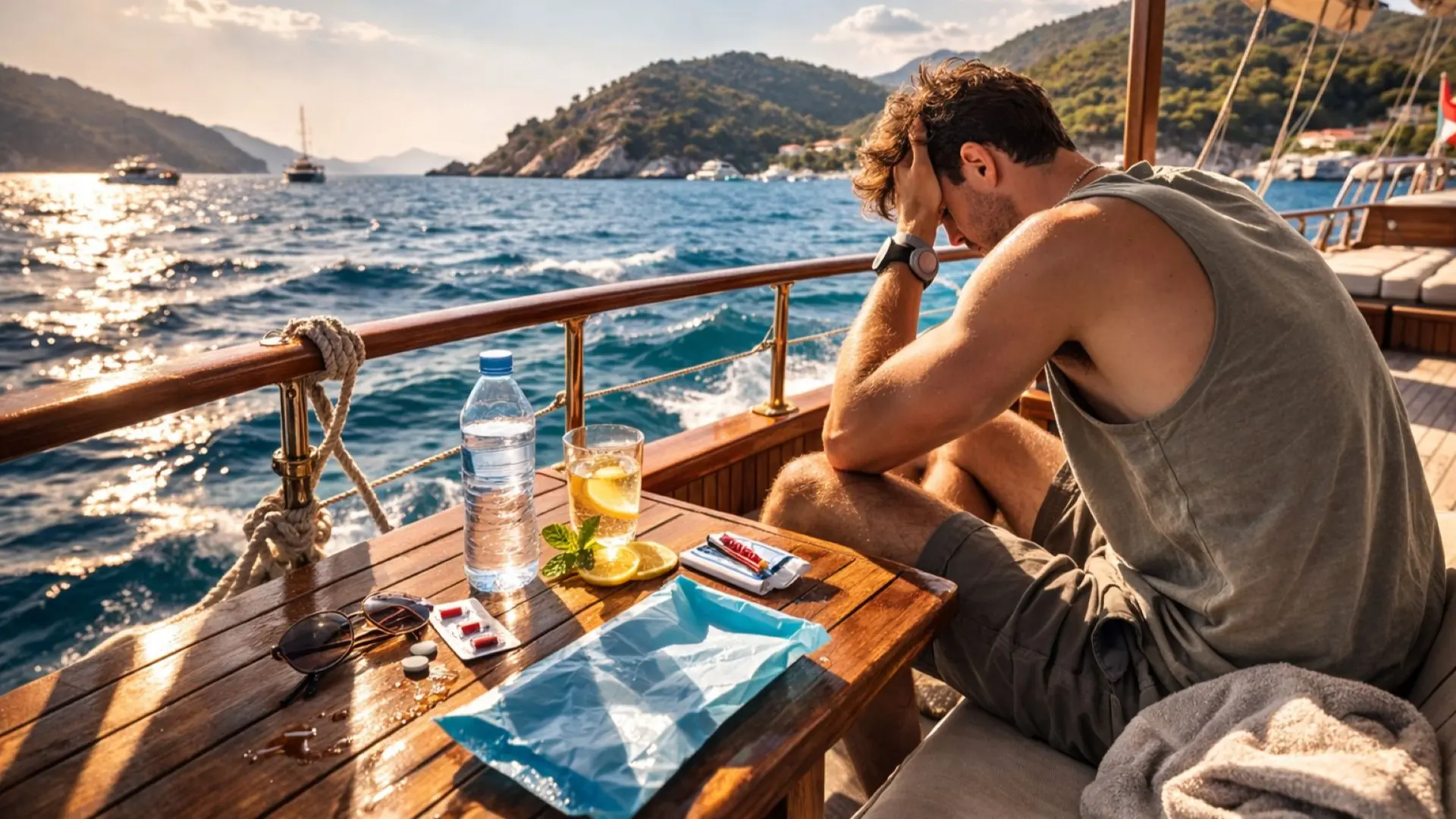
Seasickness can feel like the one thing that could ruin a dream gulet trip, but it is usually more manageable than people expect. The goal is not to “tough it out.” The goal is to prepare your body, choose the right spot on board, avoid common triggers, and respond early if nausea starts.
On a Turkish gulet cruise, many routes follow sheltered coastlines and spend plenty of time in calm bays. That can make the experience gentler than open-sea travel, but motion, heat, dehydration, strong smells, poor sleep, or too much time below deck can still make some travellers feel unwell.
The Quick Seasickness Prevention Checklist
If you only remember a few things before your gulet cruise, remember these. They are simple, practical, and helpful for many travellers.
Stay in fresh air
Stay on deck when possible and avoid spending long periods below deck while the boat is moving.
Look at the horizon
The horizon gives your brain a stable reference point and helps reduce conflicting motion signals.
Choose the stable zone
Sit or lie mid-ship, low and central, where the boat’s movement usually feels softer.
Eat lightly
Small, bland snacks are usually better than a heavy meal or an empty stomach.
Hydrate steadily
Take small sips of water throughout the day instead of drinking too much at once.
Avoid triggers
Heat, strong smells, alcohol, phone scrolling, reading in motion, and poor sleep can make nausea worse.
Why Seasickness Happens
Seasickness is basically a mixed-signal problem. Your inner ear feels movement, but your eyes may be looking at something that appears still, such as a cabin wall, a phone screen, or a book.
Your brain receives conflicting information and can react with nausea, sweating, dizziness, tiredness, or discomfort.
It is not about being weak or inexperienced. Even confident travellers can feel seasick, especially on the first day of a cruise or when the sea conditions change.
Are Gulets Better for Seasickness?
Gulets are often more comfortable than people expect. They are generally broader, heavier, and designed for relaxed cruising rather than fast, bouncy rides. Many gulet routes in Turkey also follow protected coastline and include long stops in calm bays, which can feel surprisingly stable.
Still, a gulet is not magic. Seasickness can happen when several triggers build up at the same time.
What can make nausea worse on a gulet?
- Side-to-side rocking in wind or swell
- Heat and dehydration, especially around midday
- Diesel fumes, galley smells, or other strong odours
- Spending too much time below deck
- Reading or scrolling while the boat is moving
- Large, rich, greasy, or spicy meals before cruising
- Alcohol, hangovers, and poor sleep
What to Do the Day Before You Board
The best time to prevent seasickness is before the boat starts moving. The day before boarding is about lowering your sensitivity and avoiding the classic “perfect storm” of tiredness, dehydration, heavy food, and worry.
Sleep properly
Late nights can make motion sensitivity worse the next day. Try to sleep well before departure.
Hydrate steadily
Drink water throughout the day before boarding. Steady hydration is easier on your body than drinking too much at once.
Keep food simple
Choose familiar, easy meals. Heavy, greasy, or very spicy dinners can make the first hours on board harder.
Go easy on alcohol
Alcohol, poor sleep, dehydration, and motion are a bad combination before a cruise.
What to Pack for Seasickness Prevention
You do not need to bring a pharmacy with you. Think in terms of simple comfort tools that help you stay cool, calm, hydrated, and settled.
Onboard Tactics That Actually Help
Most seasickness management on a gulet comes down to position, air, and pacing. You do not need complicated tricks. You need a calm plan you can repeat.
Where to sit or lie on a gulet
If the boat is moving and you feel even slightly off, the best default position is mid-ship, low and central. This is closer to the boat’s balance point and usually feels more stable than the bow or stern.
Try to face forward if possible and keep a clear view of the horizon.
What to eat and drink on board
The winning approach is boring on purpose: small portions, plain carbs, bananas, apples, light soups, simple eggs, yogurt if it suits your stomach, water, weak tea, or electrolyte-style drinks.
Try to avoid greasy food, heavy cream, fried items, very spicy meals, alcohol early in the day, and too much coffee on an empty stomach.
What to do with your eyes and attention
Your brain wants consistent signals. Help it by looking up and out. The horizon is your calibration line.
Avoid phone scrolling, especially below deck. Choose one calm activity instead: music, conversation, or simply watching the coastline.
The first 60 minutes strategy
When the boat starts moving, go straight to fresh air. Sit mid-ship, find your horizon view, take small sips of water, snack lightly if you are hungry, and keep your body cool with shade, a hat, or a light layer.
If Seasickness Hits Mid-Trip: A Calm Rescue Plan
When seasickness starts, people often panic and do the opposite of what helps: going below deck, lying in a stuffy cabin, skipping water, or trying to force themselves to act normal. A calm reset works better.
Move to the best spot immediately
Get to mid-ship, stay on deck, sit low, and keep fresh air plus a horizon line.
Cool down
Sit in shade, loosen tight clothing, use a damp cloth on your neck or wrists, and keep your head movements slow.
Reset your stomach gently
Take small sips of water. Try a plain snack such as a cracker, bread, or banana if you can.
Move away from smells
Engine smells, strong cooking smells, cigarette smoke, or poor ventilation can make nausea worse.
Consider simple aids carefully
Ginger, peppermint, wrist bands, tablets, or patches may help some people, but check with a professional when needed.
Tell the crew early
Crew can help with airflow, seating, meal timing, or finding a calmer spot.
Common Seasickness Aids: What They Are and When to Try Them
This is general travel information, not medical advice. The best option depends on your body, your health, and how sensitive you usually are to motion.
Tablets and patches
Common motion-sickness options in tablet or patch form may help some people, especially travellers who get sick consistently. Because people react differently, and some options can cause drowsiness or interact with medical conditions or other medications, it is smart to check with a pharmacist or doctor before using them.
Ginger and peppermint
Ginger tea, ginger candies, chews, peppermint tea, or mints are popular because they are simple and travel-friendly. They may help some people, especially with mild nausea.
Acupressure wrist bands
Acupressure wrist bands are low-effort, easy to pack, and do not involve medication. They are not a guaranteed fix, but they are reasonable to try alongside the core strategies.
When to Take Seasickness Seriously
Seasickness is usually unpleasant but temporary. Still, there are times it should not be brushed off.
- Repeated vomiting that will not settle
- Signs of dehydration, such as very dark urine, dizziness when standing, confusion, or inability to keep fluids down
- Severe headache, fainting, chest pain, or unusual weakness
- Fever, severe abdominal pain, or blood in vomit
- Any pregnancy-related concern
- A child or teen traveller becoming unwell
Frequently Asked Questions About Seasickness on a Gulet
No. Many people do not feel sick at all. Even travellers who do feel seasick often experience it only on the first day or during a short period of wind or swell.
In many cases, yes. Gulets are typically heavier and designed for steady cruising, which can feel gentler than a fast, bouncing speedboat, especially along sheltered coastline.
Most people do better with a lightly fed stomach. Small, plain snacks are usually better than going fully empty or eating a heavy meal.
Mid-ship, low and central, on deck with fresh air and a clear horizon view. This combination helps reduce the confusing motion signals that trigger nausea.
They may help some people, especially with mild symptoms. They tend to work best when paired with core tactics such as fresh air, horizon viewing, hydration, and staying cool.
They may help some people, but they are not suitable for everyone. It is best to check with a pharmacist or doctor, especially if pregnant, under 18, managing medical conditions, or taking other medication.
Yes. Strong fuel or cooking smells, overheating, dehydration, alcohol, and poor sleep can trigger or worsen nausea even in relatively calm water.
Tell the crew early. They can guide you to a better spot, improve airflow, adjust timing where possible, and help you rehydrate calmly.
Planning a blue cruise in Turkey?
Tell us your dates, route preference and group size. We’ll help you find the right gulet cruise or private boat option.